
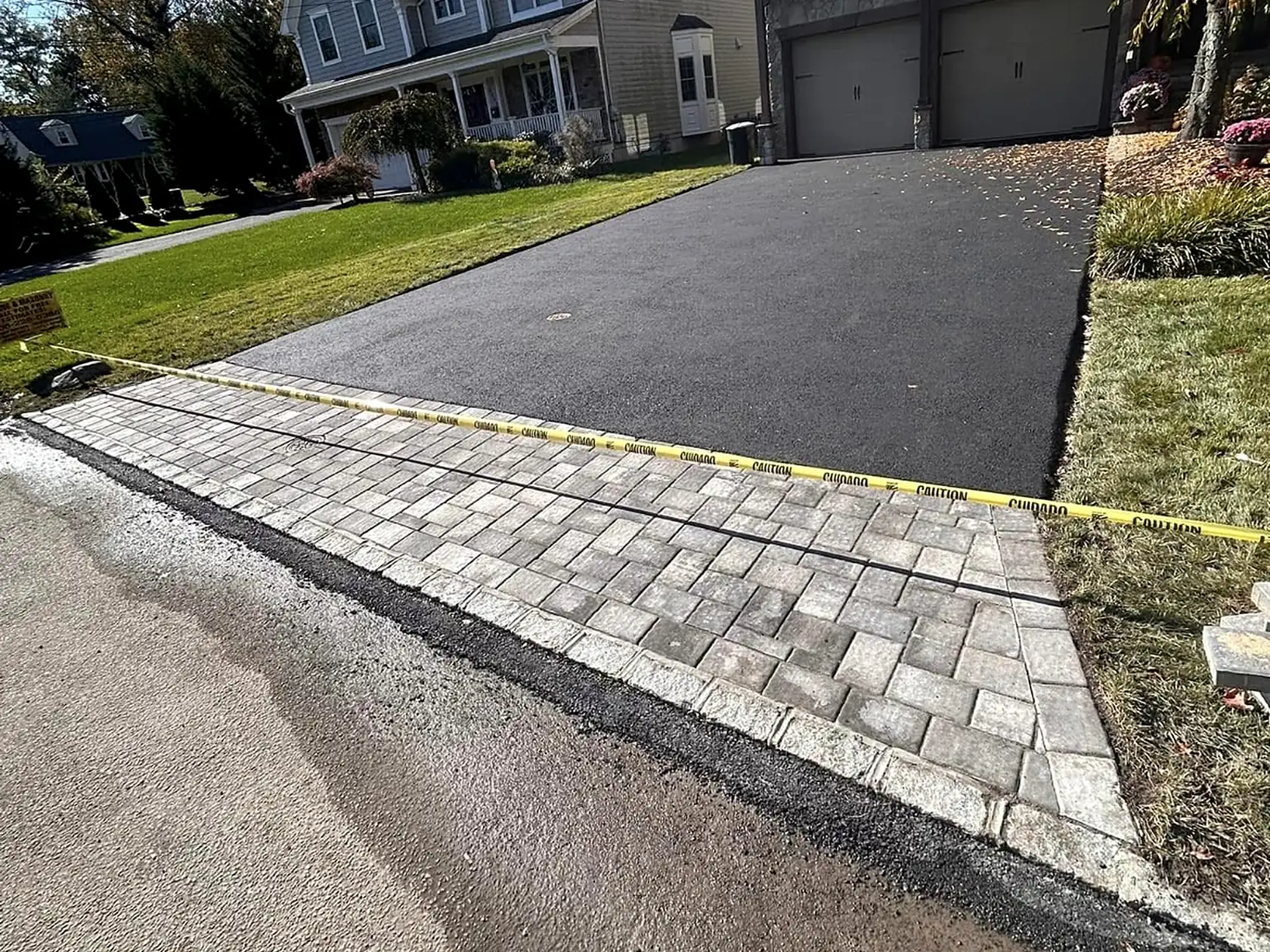
A few small cracks do not mean you need a new driveway. Recurring damage in the same places usually does, because it means the problem is not the surface you can see but the base underneath it. Knowing which of the two you have is the difference between spending a few hundred and spending several thousand.
Seven signs your asphalt driveway may need replacement
1. Widespread alligator cracking. A network of connected cracks resembling reptile skin, usually where vehicle weight sits. A few individual cracks can be sealed. Alligator cracking across an area means the pavement or the base under it has weakened, and filling the visible cracks buys a season at most.
2. Potholes that keep returning. One pothole is a repair. The same pothole coming back after being filled twice is the base failing underneath it.
3. Sinking or low areas. Depressions mean the ground beneath has settled or was never properly compacted. Resurfacing over a sunken area reproduces the sink.
4. Water that pools after every storm. Standing water is both a symptom and a cause. It says the pitch is wrong or the surface has deformed, and it accelerates everything else.
5. Crumbling edges along the length. Edges fail first because they are least supported. Crumbling at one corner is a repair; crumbling along most of the driveway is not.
6. Age plus accumulated patching. When the driveway is more patch than original surface, further patching stops being economic.
7. Cracks that reopen after being sealed. (Routine sealcoating is a different job; this is about crack sealant.) Sealant that keeps splitting in the same line is movement underneath, not a sealant failure.
Should you repair, resurface or replace?
Repair handles isolated damage on a sound driveway. Resurfacing puts a new wearing course over a base that is still working, for a fraction of replacement cost. Replacement is for when the base has gone, and no surface treatment fixes that.
The distinction is worth pressing any contractor on. Resurfacing a driveway whose base has failed is a job that looks finished and fails again quickly, and it is one of the more common ways homeowners pay twice.
How Montclair weather affects asphalt
Freeze and thaw is the main mechanism. Our winters cross the freezing point repeatedly rather than staying cold, and each crossing drives water into the surface, expands it, and opens the gap slightly further. Road salt attacks the surface from December onward, and summer sun oxidises it and makes it brittle.
On the Watchung ridge, where much of Montclair sits, add slope. Water arrives from uphill whether or not the driveway was built to handle it.
What happens during an asphalt driveway replacement?
Excavation. The old surface and any soft or unsuitable fill are removed, and the ground is cut down to a subgrade that will actually carry the driveway.
Base and compaction. Crushed stone goes back in layers, and each layer is compacted before the next. The required depth is not a number we can give you before excavation. Hard, stable subgrade may need very little corrective work, while soft clay, organic material or previously disturbed ground may need deeper excavation, more compacted stone and, where appropriate, separation fabric. The final base specification is decided by what is found on site, and it appears in writing on your quote.
Pitch and drainage. The surface is graded away from the house and toward somewhere the water can actually go.
Paving and compaction. Asphalt is laid and rolled while hot.
Edges. Edges are supported or restrained, and a paver or cobble border is worth considering, because that is the part that fails first.
What affects asphalt driveway replacement cost?
- Ground conditions. The single biggest variable, and the one nobody can see until the excavator arrives.
- Access. A driveway a machine can reach costs less than one where material is barrowed through a gate.
- Removal and disposal. Real cost, and concrete removal costs more than asphalt.
- Drainage work. If water currently collects somewhere, it has to be dealt with.
- Size and shape. Curves, tight corners and obstacles mean more cutting and more waste.
- Edge detail. A paver or cobble border is labor, and it is also the detail people notice.
There is more on this on our what drives the price page, including the five questions worth asking every contractor who quotes you.
Frequently asked questions
How long does a replacement take?
Most residential driveways are a two visit job: excavation and base first, then paving. Weather moves those dates more than anything else, since asphalt does not lay well cold or wet.
When can I drive on it?
New asphalt needs time to cure and stays soft in hot weather for a while afterwards. We will give you the timing for your driveway when the work is booked.
Can you pave over the existing driveway?
Only where the base is sound and the surface is simply worn. Over a failed base it cracks in the same places within a couple of seasons.
Do I need a permit?
It varies by municipality, and some towns take an interest in drainage changes and curb cuts. We will go through what your town is likely to want before the work is scheduled.