Tar and chip, oil and stone, chipseal
Three names for closely related surfaces, and one of the few finishes that suits a long country drive.
Same idea, different names
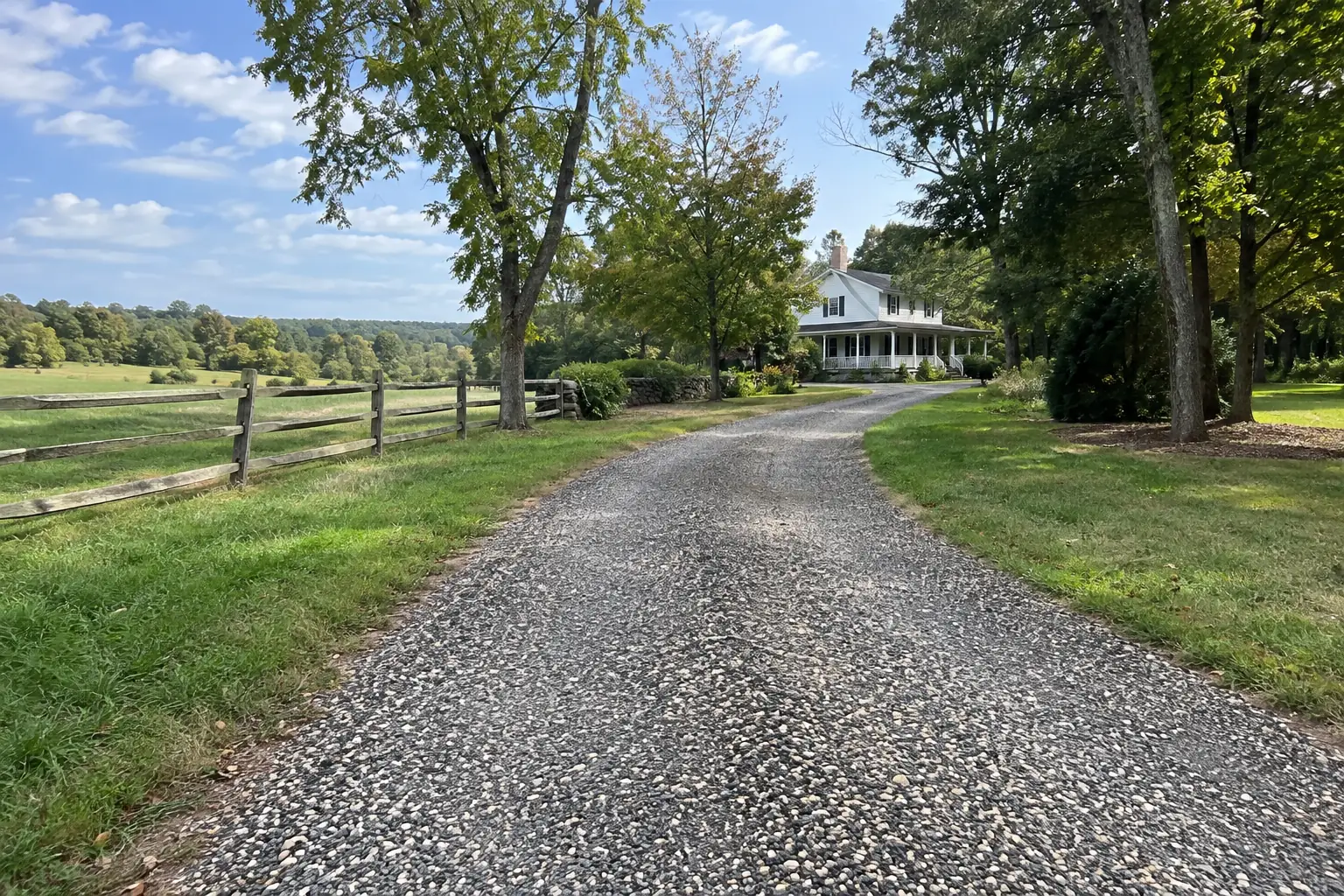
Tar and chip, oil and stone and chipseal all describe a surface built the same way. Hot liquid asphalt is applied over a prepared base, then stone chips are spread across it and rolled in. The stone locks into the binder and becomes the wearing surface.
Which name a contractor uses tends to depend on where they trained rather than on any real difference in the finished driveway. Courtyard installs all three, and the specification is worth more of your attention than the label.
Why people choose it
- A natural stone finish that suits older houses, long drives and rural settings better than flat black asphalt
- Good traction, which matters on any driveway with a slope
- The stone color is a real choice, so the driveway can be matched to the house
- No sealing schedule to keep up with
What to know before you commit
The surface is textured rather than smooth, so it is harder to shovel snow off than asphalt and it will shed some loose stone in its first weeks. It is not the right surface for somewhere you want to shoot hoops or push a stroller.
The base matters just as much as it does under asphalt. A stone surface laid over a poor base fails in the same way and for the same reasons.
Where it works best
Long driveways where the cost of asphalt across the whole run is hard to justify. Properties where a black surface would look wrong against the house. Rural and semi rural settings across New Jersey, which is a large part of why we get asked for it statewide rather than only near Montclair.
Common questions
Is tar and chip cheaper than asphalt?
It is often less expensive per square foot, which is why it comes up on long driveways. The base work underneath is the same though, so the saving is smaller than people expect on a short drive.
How long does it last?
It depends heavily on the base, the traffic and the climate. It is a durable surface when it is built properly, and a poor one when the base was skipped, which is true of every driveway surface.
Does it need sealing?
No. That is one of the reasons people choose it.
Can you put it over an existing driveway?
Sometimes, if the existing surface and base are sound. We would look at it before answering, because applying it over a failing surface just moves the problem up an inch.
This page was last updated in September 2026.
Ready for a straight answer on your project?
Call (973) 489-3642 or send a couple of photos and we will tell you what the job actually needs.