
Driveway repair and resurfacing
If a repair will do, we will tell you that instead of quoting a new driveway.
Repair, resurface or replace
A tired driveway usually needs less than people fear, and sometimes more than a patch. The deciding factor is the base underneath. If the stone base is still sound, the problems on the surface can be repaired or resurfaced for a fraction of the cost of a new driveway. If the base has failed, anything laid on top of it will crack again in the same pattern, and the honest answer is replacement.
The surface tells you which. Isolated cracks, a pothole or a crumbling edge are repairs. A worn, faded, rough surface over a base that has not moved is a resurfacing candidate. Cracking in a tight pattern like the skin of an alligator, areas that sink, or water that pools in the same spots after every storm usually mean the base has gone.
The repairs, one by one
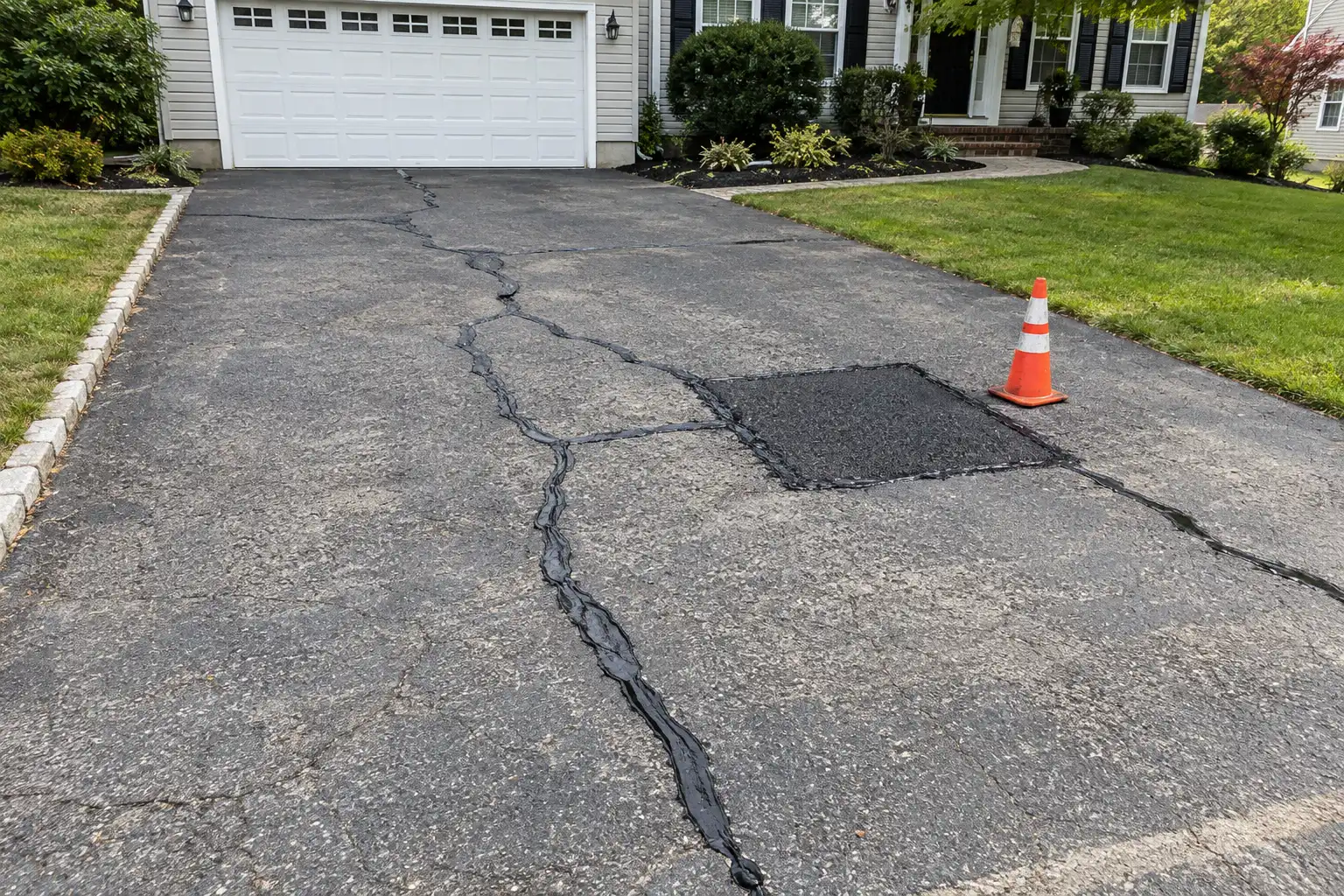
Crack sealing. Cracks are cleaned out and filled with a flexible sealant that moves with the driveway through the seasons. Sealing them stops water getting into the base, which is what turns a crack into a pothole.
Pothole and patch repair. A proper patch is cut out square to sound asphalt, the base underneath is checked and topped up, and new hot asphalt is compacted in. Throwing cold patch into a hole is a stopgap for a week, not a repair.
Edge repair. Driveway edges crumble when there is nothing to support them, especially where cars run off the side. Rebuilding the edge and giving it support, such as a paver or Belgian block border, stops it happening again.
Sunken areas. A dip usually means soft ground or water under the base. The section is cut out, the base rebuilt and compacted, and new asphalt laid.
Resurfacing. Where the surface is worn but the base is sound, a new wearing course is laid over the old one after repairs are made and the edges and entrances are milled or cut so the new surface meets the garage and the street cleanly.
Keeping it repaired
Once the repairs are in, sealcoating protects the surface from water, sun and salt. It is the cheapest thing you can do to extend a driveway's life, as long as it goes over a surface that has been repaired first rather than over open cracks.
Common questions
How much does it cost to fix a driveway?
It depends on what is wrong with it. Crack sealing a sound driveway is a small job, patching several failed sections is a bigger one, and resurfacing is priced on the area. We look at it and give you a written price for the repair it actually needs. See what drives the price.
Can a cracked driveway be repaired?
Yes, if the base under it is sound. Individual cracks are sealed and failed sections are cut out and patched. If the cracking covers the whole driveway in a tight pattern, the base has failed and repairs will not hold.
Are hairline cracks in a driveway normal?
Yes. Asphalt shrinks, ages and moves with frost, and fine cracks appear on most driveways over time. They are not a problem in themselves. Sealing them before water gets in keeps them from becoming one.
What is the cheapest driveway repair?
Crack sealing, followed by sealcoating once the cracks are filled. On a driveway with a sound base, those two done on time prevent most of the bigger repairs.
How can I repair my driveway myself?
Small cracks can be filled with a store bought filler, and that is worth doing while you wait for a proper repair. Potholes, sunken areas and resurfacing need hot asphalt and compaction equipment to last.
This page was last updated in September 2026.
Want to know what your driveway actually needs?
Call (973) 489-3642. A repair done in time saves the base, and the base is most of the cost.