
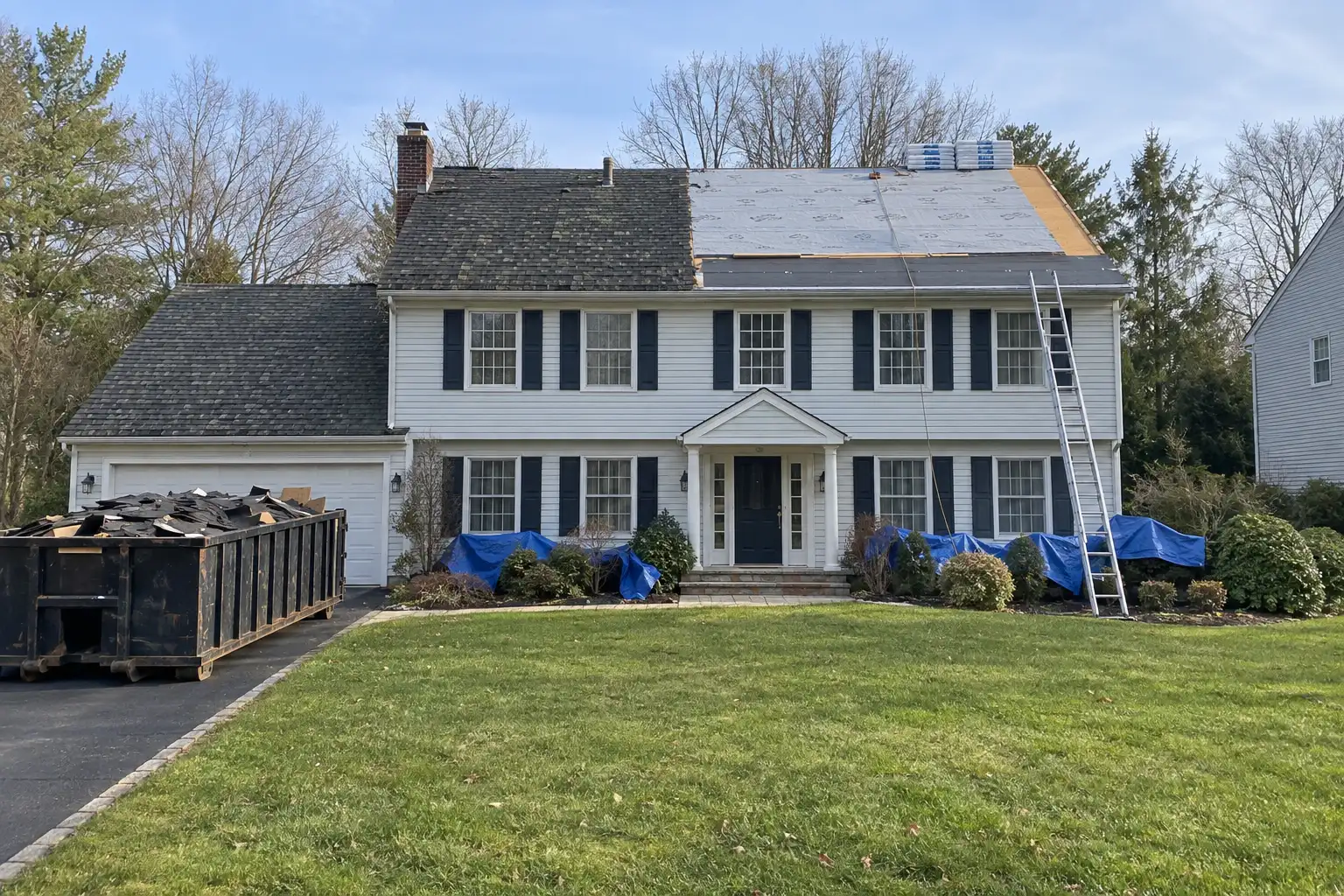
Roof replacement in New Jersey
A full tear off, a deck you can see, and everything from the eaves to the ridge going back new.
When a roof is due, it is due everywhere at once
A roof near the end of its life does not usually fail in one spot. The shingles lose their granules across the whole field, the tabs curl or crack, and leaks start turning up in places that have nothing to do with each other. Once a roof reaches that point, a repair just moves you to the next leak. That is when a replacement is the honest answer, and it is worth knowing what one should involve so you can compare quotes on something other than the number at the bottom.
What a replacement involves, in order
- Tear off and disposal. The old roof comes off rather than being layered over. Layering hides the deck, adds weight, and leaves the next person two roofs to remove.
- Deck inspection. With the roof off, the deck can finally be seen. Soft, delaminated or rotted sheathing is replaced rather than covered.
- Ice and water protection. New Jersey gets the freeze and thaw cycling that produces ice dams, so this membrane at the eaves and in the valleys matters here more than it does further south.
- Synthetic underlayment over the rest of the deck, as a second water barrier under the shingles.
- Drip edge and flashing. New metal at the eaves and rakes, and new flashing at walls, valleys and chimneys. Reusing old flashing is one of the most common reasons a new roof leaks in the same place the old one did.
- Shingles, laid to the manufacturer's pattern and nailing specification, which is also what keeps the manufacturer's warranty intact.
- Ridge ventilation, paired with intake at the soffits. Exhaust without intake does very little, and a roof that cannot breathe cooks its shingles from below.
- Cleanup and a magnetic sweep. Nails end up in lawns and driveways on every tear off. The sweep is part of the job, not an extra.
What changes the price
Size is the obvious one, but it is not the only one. Pitch changes how the crew works and how long it takes. Every valley, skylight, chimney and vent pipe is flashing detail that has to be done by hand. The number of layers coming off changes the disposal, and access for a dumpster changes the logistics. Then there is the deck, which nobody can fully assess until the old roof is off. A good quote says in writing how damaged sheathing will be handled if it is found, rather than pretending it will not be.
Ask every contractor for the shingle product line, the underlayment, the flashing detail and the ventilation plan in writing. Those four are where cheap roofing quotes get cheap, and all four are invisible from the ground once the job is finished.
Your house during the job
A tear off is loud and messy for a short time. Expect a dumpster on the driveway, tarps over the shrubs and beds that sit against the house, and a crew on the roof for most of the day. Any section that is opened up should be dried in before the crew leaves, so the house is not left open to weather overnight; ask every roofer how they handle that. Tell us about anything in the attic you care about, because a tear off shakes dust and the odd nail tip through the boards.
If the gutters are tired or the chimney needs work, the replacement is the time to do it. Flashing ties into both, and doing them together means nobody has to disturb a new roof to get at them later.
Common questions
How much does it cost to fully replace a roof?
It depends on the size and pitch of the roof, how many layers are coming off, how much flashing detail there is, what the deck looks like once it is exposed, and the shingle line you choose. We measure on site and give you a written scope and price. Our pricing page explains what moves the number.
What is the cheapest way to replace a roof?
Layering new shingles over the old ones is cheaper on the day, and it is the one shortcut we do not take. It hides the deck, adds weight and doubles the next tear off. The honest ways to spend less are to replace only when the roof is actually due, to choose a standard shingle line rather than a premium one, and to do related work such as gutters in the same visit.
What can I do if I cannot afford a new roof yet?
If the roof still has some life in it, targeted repairs at the worst spots can buy time, and we will tell you plainly how much time. If the damage came from a storm, talk to your insurer before anything else, because that changes who pays.
What is the best time of year to replace a roof?
Late spring through fall is easiest, because shingles seal to each other in warm weather. Roofs can be replaced in cooler months with more care over the seal, and a roof that is leaking should not wait for the perfect season.
Do you layer a new roof over the old one?
No. The old roof comes off every time, so the deck can be inspected and repaired before anything goes on top of it.
Which shingles and warranties do you offer?
That is set out on your written quote, along with the underlayment and flashing detail, because it depends on the roof and your budget. There are normally two separate warranties in play, one from the manufacturer on the material and one from the contractor on the workmanship, and they cover different things.
This page was last updated in September 2026.
Is it a repair or a roof?
Call (973) 489-3642. We will tell you which one you have before we quote either.