
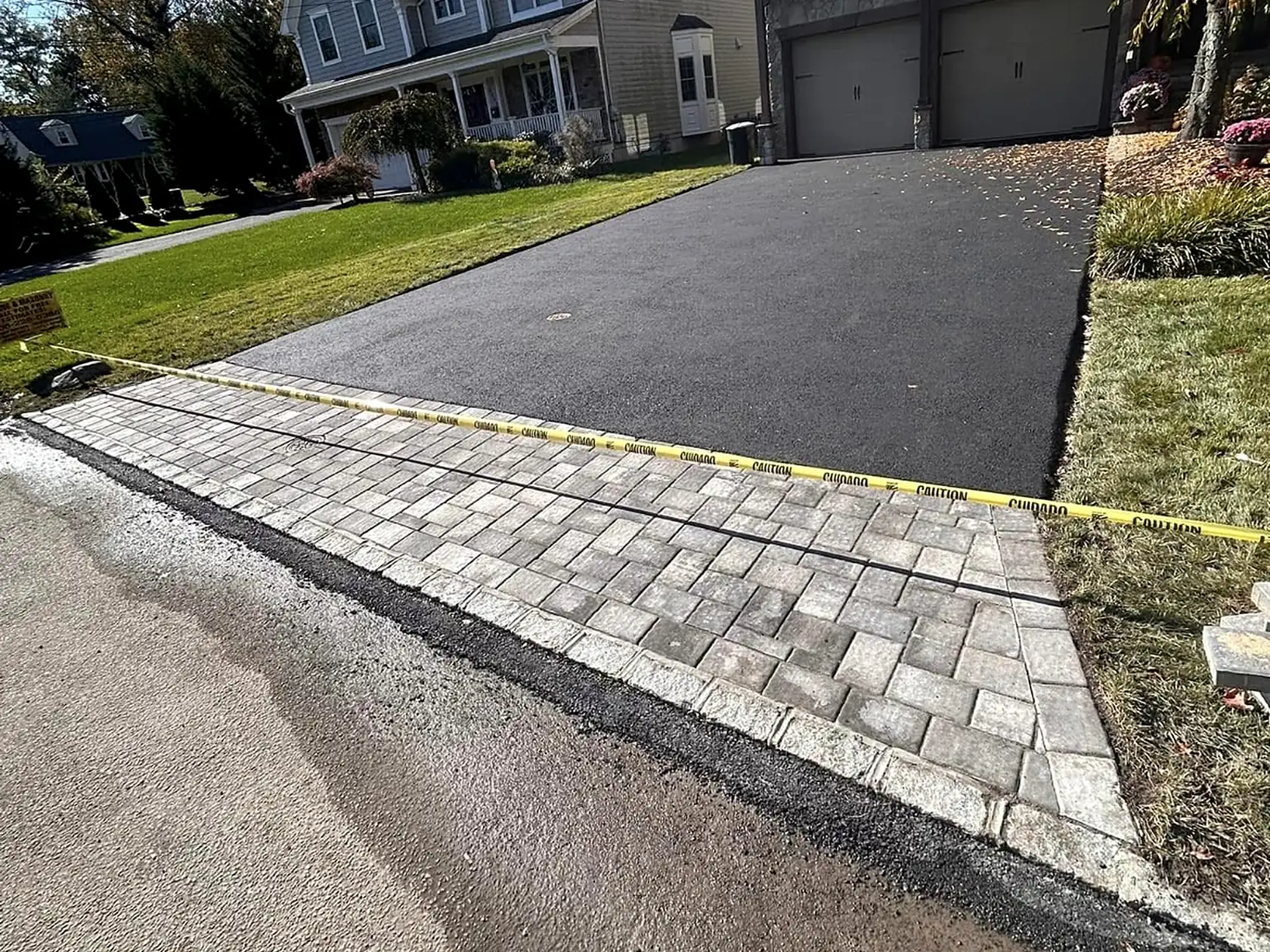
Asphalt driveway paving
New driveways and full replacement, built from the subgrade up rather than laid over the problem.
The surface is the easy part
Laying asphalt is the quickest stage of a driveway job and the one everybody photographs. The stages that decide whether it is still flat in ten years happen before the paver arrives, and they are the stages that get shortened when a price looks suspiciously low.
What the work involves
Excavation. The old surface and any soft fill come out, and the ground is cut down to real subgrade. Cutting deep enough at the start is what stops settlement later.
Base and compaction. Crushed stone goes down in layers, and each layer is compacted before the next one goes on top. One thick uncompacted lift looks the same on day one and behaves nothing like it in year three.
We will not publish a single stone depth here, because that is not how the work is decided. The required depth is determined after the existing driveway is excavated. Hard, stable subgrade may need very little corrective work, while soft clay, organic material or previously disturbed ground may need deeper excavation, more compacted stone and, where appropriate, separation fabric. The specification for your driveway is set by what is found on site and written into your quote before anything is ordered.
Pitch and drainage. The surface is graded away from the house and toward somewhere the water can actually go. Water that sits is water that freezes, lifts and cracks.
Edges. Driveway edges take the most abuse and fail first. A paver or cobble border is worth considering, both because it holds the edge and because it looks considerably better than a raw asphalt lip.
When replacement is the right call
- Alligator cracking across a large area rather than a few isolated lines
- Potholes that keep returning after patching
- Areas that have sunk or hold water after every storm
- Edges crumbling along most of the driveway
- A surface that has been patched so many times it is more patch than driveway
If none of those apply, say so when you call. Resurfacing or repair is very often the cheaper and more sensible answer, and we would rather quote the right job than the bigger one.
Common questions
How thick should the asphalt be?
It depends on what is driving over it. A residential driveway carrying cars is a different specification from one taking delivery trucks, and the base under it changes too. We size both to your actual use when we quote.
Can you pave over the existing driveway?
Sometimes. Overlaying works when the base underneath is sound and the surface is simply worn. It is the wrong answer when the base has failed, because the new surface will crack in exactly the same places within a couple of seasons.
What time of year is best?
Asphalt lays best in warm, dry conditions. Work can run into the cooler months, but cold and wet weather affects how the material compacts, so scheduling matters more than people expect.
Do you handle the permits?
Requirements vary by municipality, and some towns take an interest in drainage changes and curb cuts. We will tell you what your town needs before the work is booked.
This page was last updated in September 2026.
Ready for a straight answer on your project?
Call (973) 489-3642 or send a couple of photos and we will tell you what the job actually needs.