
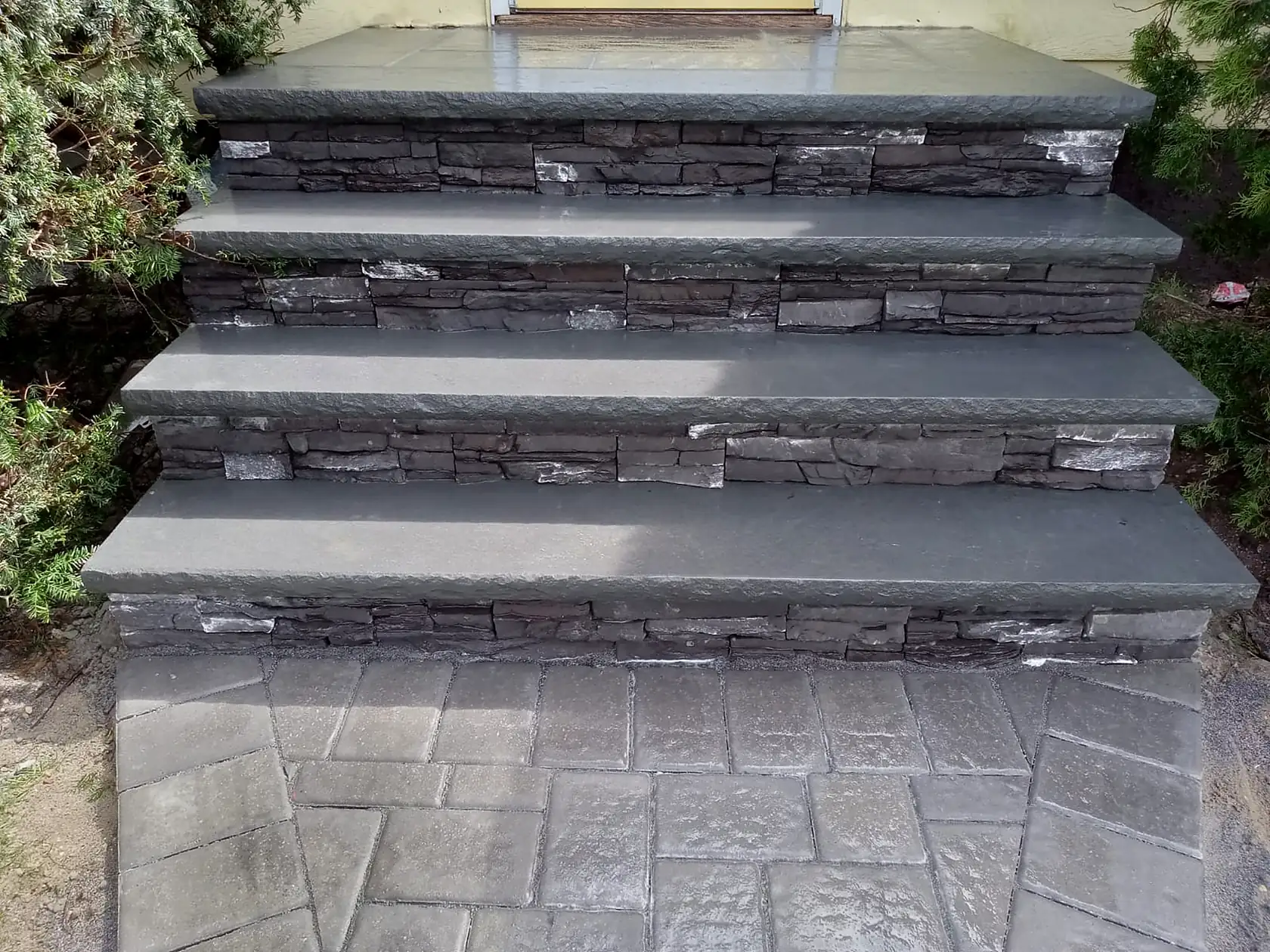
Steps and stoops
The first thing a visitor stands on, and the first thing to fail when water gets underneath.
Steps fail from below, not from the top
Cracked treads and loose risers are usually symptoms. The cause is normally underneath: a footing that was not deep enough, water collecting where the steps meet the house, or ground that has settled and taken the steps with it.
That is why patching the visible damage on a set of steps so often lasts one season. The patch is fine. What it is sitting on is not.
Repair or rebuild
Repair makes sense when the structure is sound and the damage is surface level. Spalled concrete, a loose tread, damaged pointing between bricks, or a riser face that has come away can all be put right without starting again.
Rebuilding is the honest answer when the steps have separated from the house, when they have visibly settled or tilted, when cracking runs through the structure rather than across the surface, or when the same repair has already been done twice.
Materials
- Bluestone treads, which wear extremely well and suit most New Jersey housing stock
- Natural stone riser faces, for a heavier and more traditional look
- Brick, matched as closely as the existing brick allows
- Poured concrete, plain or with a stamped and textured finish
- Paver landings, tying the steps into a walkway or driveway
Getting the geometry right
Step risers should be consistent. Uneven risers are the single most common cause of trips on residential steps, and they are usually the result of a rebuild that had to meet an existing threshold height without adjusting the run. Setting that out properly is part of the job, not an extra.
Common questions
My steps are pulling away from the house. Is that serious?
It is worth looking at. Separation usually means the steps have settled independently of the foundation, which points at what is under them rather than at the steps themselves.
Can you match my existing brick or stone?
Often closely, rarely perfectly, particularly on older houses where the material has weathered for decades. We will show you the closest option before ordering.
Do you replace just the treads?
Sometimes, when the structure under them is genuinely sound. If it is not, replacing treads is money spent on the visible half of the problem.
How long does a step rebuild take?
Most residential front steps are a short job, though curing time means the steps are not usable immediately. We will tell you when you can walk on them.
This page was last updated in September 2026.
Ready for a straight answer on your project?
Call (973) 489-3642 or send a couple of photos and we will tell you what the job actually needs.