
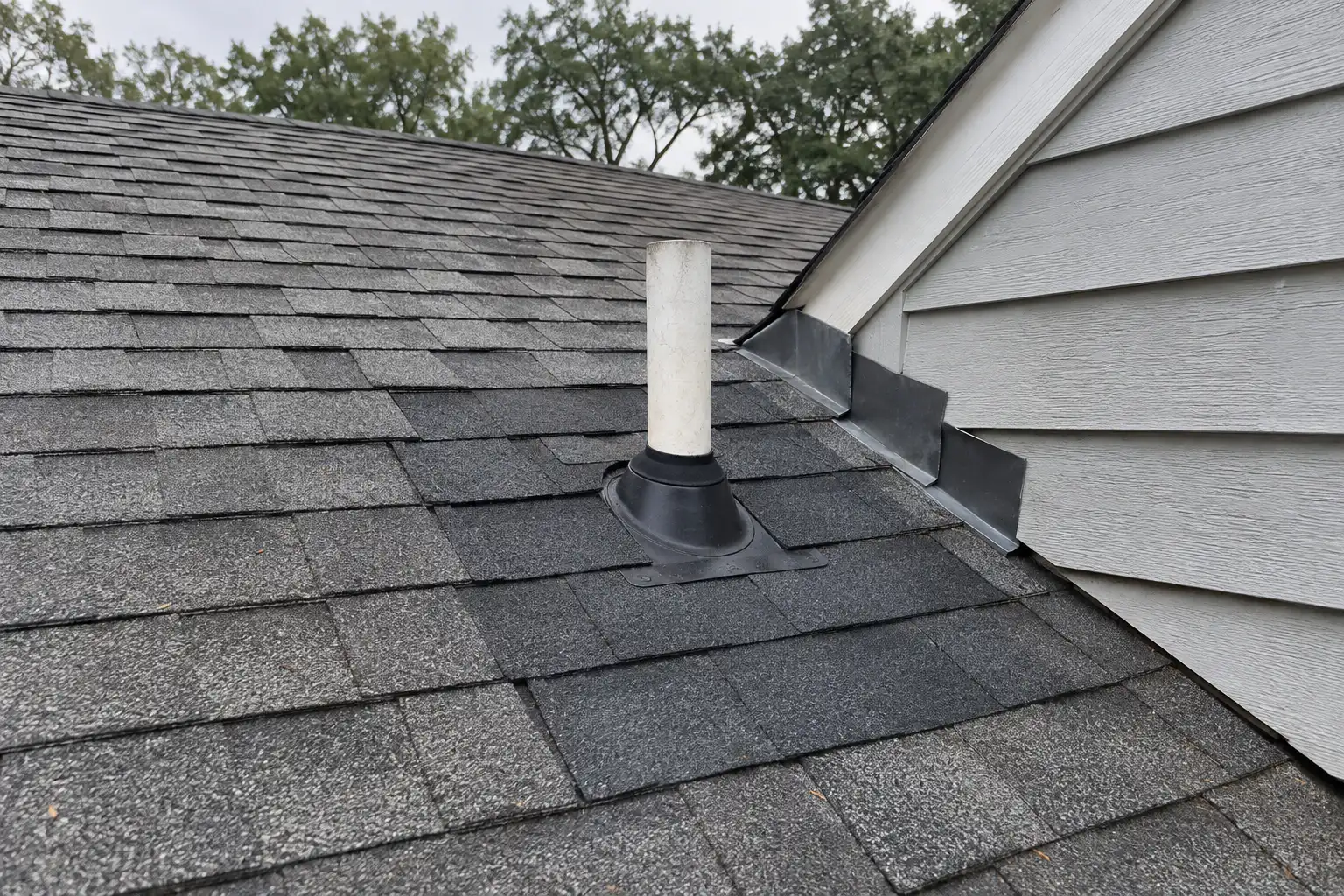
Roof repair in New Jersey
Most leaks are one detail, not the whole roof. We find which one before quoting anything.
Where the water shows is rarely where it gets in
A stain on a bedroom ceiling tells you water reached that spot. It does not tell you where it came through the roof. Water runs down the underside of the deck, along rafters and across insulation before it drips, so the entry point can be several feet uphill of the stain. Patching the roof directly above a stain is how the same leak gets "fixed" twice.
So a repair starts with finding the entry point. We look at the roof from outside and, where we can, from the attic, and we work out which of the usual suspects is responsible before anything gets priced.
The usual suspects
- Flashing where the roof meets a wall, a dormer or a chimney. This is the most common leak source on any house, and the one most often reused on a cheap job.
- Pipe boots. The rubber collar around a plumbing vent dries out and cracks long before the shingles around it wear out.
- Valleys, where two roof planes meet and carry the most water. A valley that was cut short or nailed in the wrong place leaks every heavy rain.
- Wind damage. Lifted, creased or missing shingles after a storm let water straight onto the underlayment.
- Ice dams. Snow melts over the warm part of the roof, refreezes at the cold eave, and backs water up under the shingles. That is a ventilation and insulation problem showing up as a leak.
- Skylights, covered below.
What the repair involves
Once the source is found, the repair is made at the source: new flashing rather than caulk over old flashing, a new pipe boot rather than sealant around a cracked one, and replacement shingles woven into the existing roof so they shed water the way the originals do. Where water has been getting in for a while, we check the deck underneath, because a repair laid over soft sheathing does not hold.
Replacement shingles on an older roof will rarely match its color exactly, because the existing roof has weathered. We will tell you that before we start rather than after.
Skylights
Installation, reseals and leak repair. A leaking skylight is usually a flashing problem rather than a failed unit, and the flashing can be redone without replacing the glass. Where the unit itself has failed, fogged between the panes or cracked, replacement is the answer, and it is worth doing at the same time as any roof work around it.
When a repair stops being the right answer
Repairs make sense on a roof with life left in it. When the shingles are losing granules across the whole field, curling, cracking in many places, or the deck is soft in more than one spot, repairing one leak just moves you to the next one. At that point we will tell you it is a roof replacement and explain why, rather than selling you a string of repairs.
Common questions
How much will it cost to repair a roof?
It depends on what failed and how far the water got. A cracked pipe boot is a small job; a section of wet decking under a failed valley is a bigger one. We find the source first and then give you a written price for fixing it, not a number guessed from the ground. See what drives the price.
Does homeowners insurance pay for roof repairs?
That depends on your policy and on the cause. Sudden damage, such as a storm lifting shingles, is treated differently from wear that built up over years. Your insurer decides that, not the contractor. What we can do is tell you plainly what we found and what caused it, which is the first thing an adjuster will ask.
Can you repair just part of a roof?
Yes, and on a roof with life left in it that is usually the right call. The one thing to expect is that new shingles will not match weathered ones exactly, so a repair on a very visible slope will show for a while.
What is the best time of year for roof repair?
For a leak, the best time is now, because every rain makes it a bigger job. Shingles seal to each other best in warm weather, so cold-weather repairs need more care with the seal, but a leak should not wait for spring.
Do you do emergency roof repairs?
Call us as soon as water is coming in and we will tell you honestly how quickly we can get to you. If it is actively raining inside, move what you can, catch the water, and photograph the damage for your insurer.
This page was last updated in September 2026.
Water where it should not be?
Call (973) 489-3642. A leak left alone becomes a deck repair, then a ceiling repair.