
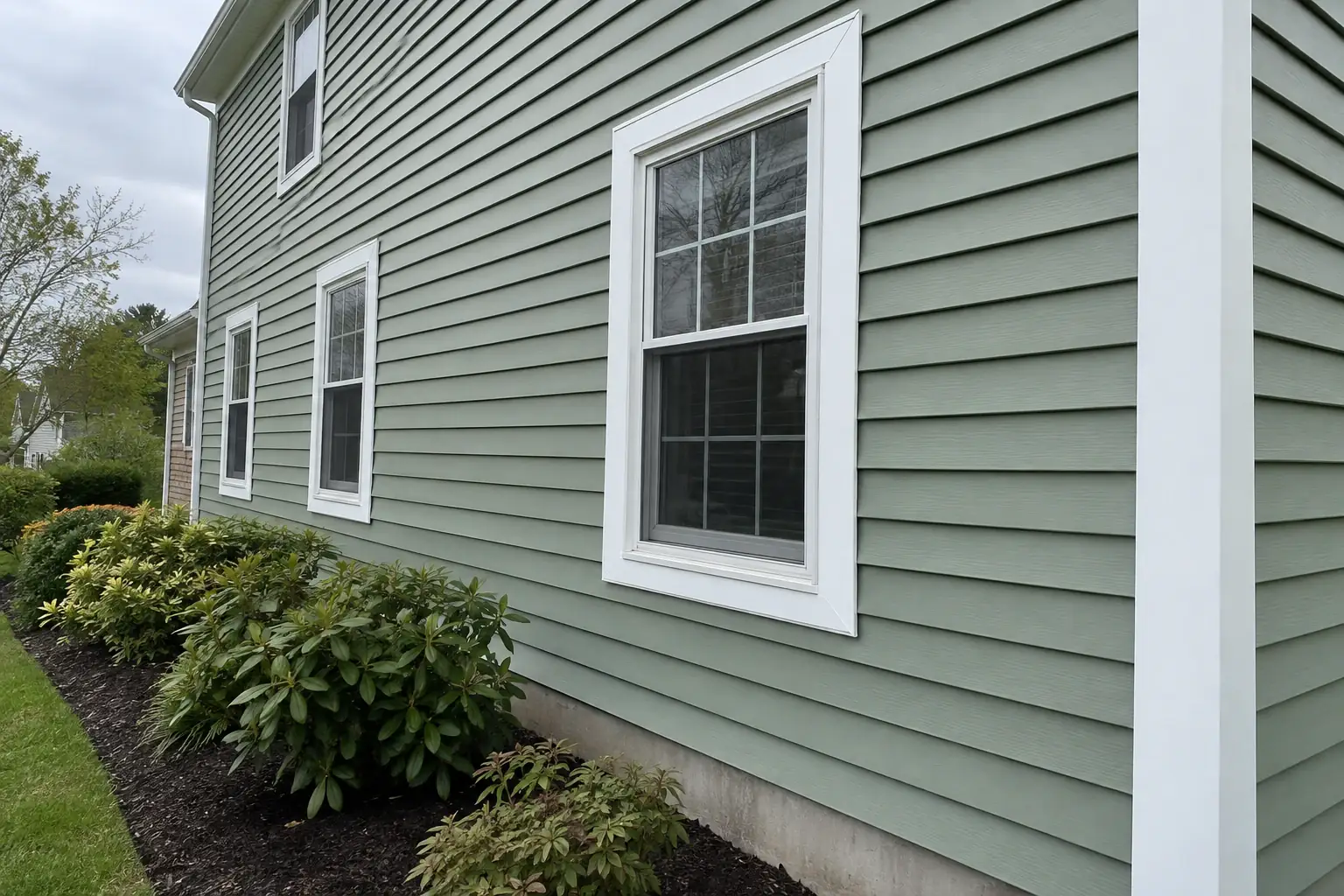
Siding repair and replacement
The walls, the trim around them, and the soffits that keep the roof breathing.
Siding is a rain screen, not just a finish
Siding is the part of the house people judge from the street, so it is easy to treat it as a cosmetic choice. Its real job is to shed water. Behind it sits a weather barrier, and around every window, door and roof edge sits flashing that sends water back out. When siding fails, the damage that costs money is usually the wet sheathing and framing behind it, not the panels themselves.
That is why a siding job starts with what is underneath. Where panels come off, we look at the wrap and the sheathing before anything new goes back up.
Repair or replace
Isolated damage is a repair: a panel cracked by a ball or a mower stone, a few courses loosened by wind, a section behind a gutter that has been overflowing for years. The catch with repairs is matching. Older siding fades, and a new panel from the same line can read as a different color for a while. On a side of the house nobody sees, that rarely matters. On the front, it can be the reason to reside a whole wall.
Replacement makes sense when the siding is failing across the house: widespread cracking, warping, soft or rotted boards on wood siding, or repeated water damage behind it. It is also the one chance to replace the weather barrier and fix the flashing around every opening while the walls are open.
Trim, fascia and soffits
Siding rarely stands on its own. The fascia board behind the gutters, the soffits under the eaves and the trim around windows and corners all age with it, and rot in the fascia is often the first thing a siding job uncovers.
Soffits deserve a special mention. Vented soffits are the intake half of your roof ventilation, feeding air to the ridge vent. Blocking them while replacing siding or trim is a common and expensive mistake, because the roof above starts to run hot and wet. We keep them open.
Choosing a material
The common choices on New Jersey houses are vinyl, fiber cement and wood. Vinyl is the least expensive to install and needs no painting. Fiber cement costs more, is heavier to hang, and holds paint well for a long time. Wood looks right on older houses and costs the most over its life, because it needs painting and watching for rot. The right answer depends on the house, the street and how long you plan to stay, and we will talk through it on site.
Common questions
How much does a contractor charge for siding?
The price follows the size of the house, the number of stories, the material, the amount of trim and window detail, and what is found under the old siding once it comes off. We measure on site and give you a written price that says how any damaged sheathing will be handled. See what drives the price.
Is vinyl or wood siding cheaper?
Vinyl is usually cheaper to install and much cheaper to own, because it never needs painting. Wood costs more up front and more over time, and people choose it for how it looks on a particular house rather than for price.
What is the best time of year to install siding?
Spring and fall are easiest. Vinyl moves with temperature, so it has to be hung with room to expand and contract, and it becomes brittle in deep cold. Siding can go up in most of the year with the right care.
Where can I find siding installers in New Jersey?
We are based in Montclair and work across the state. See where we work, or call us with your town.
Can you replace just one wall?
Yes. Expect the new siding to look brighter than the rest until it weathers, which is why a single wall is usually a side or back wall rather than the front.
This page was last updated in September 2026.
Siding looking tired, or letting water in?
Call (973) 489-3642. We will tell you whether it is a repair or a wall.